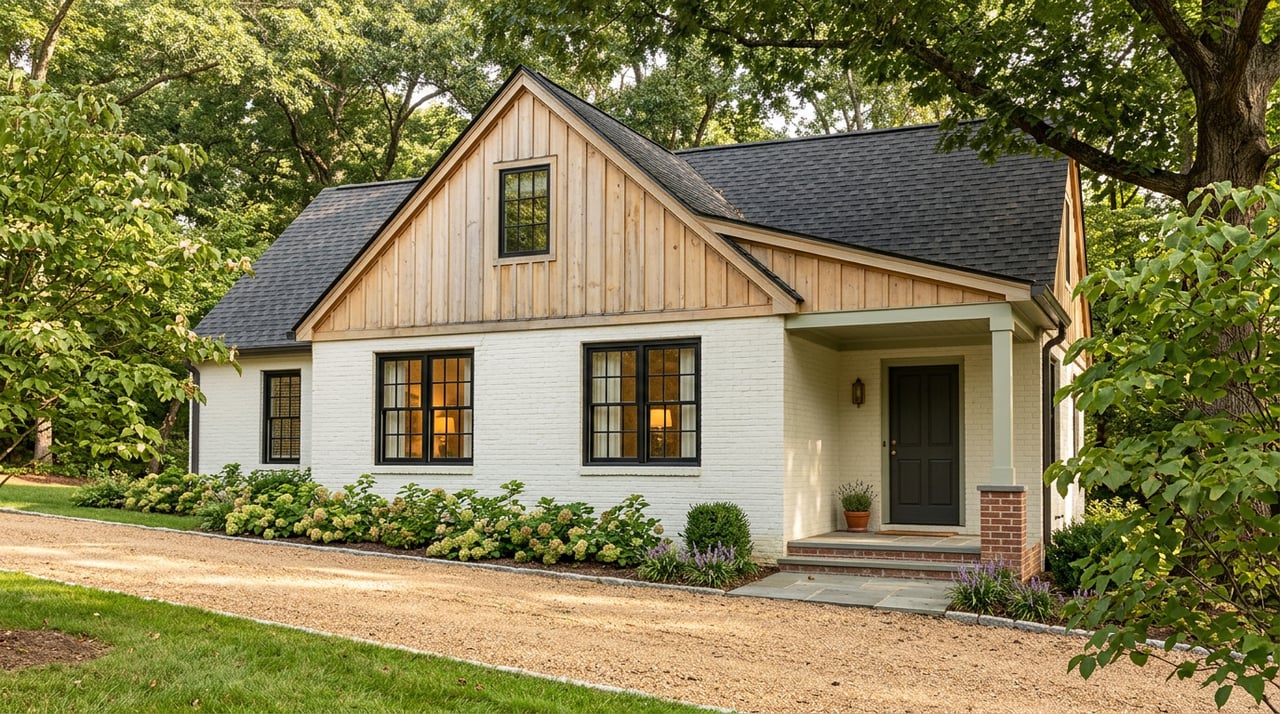
The Bedroom Count That Can Reprice a Chapel Hill Home on Septic
August 6, 2026
August 6, 2026
A Chapel Hill listing lives or dies on two numbers most sellers never think about together: the bedroom count on the MLS, and the bedroom count on the septic permit filed with Orange County Environmental Health. When those two numbers disagree, the house you thought you were selling is not the house that will close.
That gap is where money moves. A finished lower level with a closet, a bonus room used as a fourth bedroom, a converted study over the garage — none of it counts unless the permit says it does. In a market where much of Chapel Hill outside the town core still runs on private septic, the permit is the ceiling on what the house can legally be marketed as, and often on what it can be priced at.
North Carolina sizes septic systems by bedrooms, not bathrooms and not square footage. The state assumes roughly two people per bedroom and around 110 gallons of daily wastewater per bedroom, so a three-bedroom permit is designed to handle a three-bedroom household. Add a fourth sleeping room without a permit revision and the system is, on paper, overloaded the day it changes hands.
Orange County treats a bedroom broadly. Per Orange County Environmental Health, for septic sizing, a bedroom is any room that could reasonably be used as a bedroom, even if it is currently used for something else. That definition matters when a lender's appraiser or a buyer's agent walks through and counts differently than the permit does.
The three permits that govern the sale sit in a specific order:
That last permit is the piece that makes a Chapel Hill sale different from a Cary or Apex sale on public sewer.
Orange County's regulatory guidance is explicit that an Operation Permit is required for property transfer, with the existing system inspection performed by a Licensed Soil Scientist or Authorized Agent. Translated into the closing calendar: a qualified professional has to look at the system, and the county has to bless the transfer, before the deed records cleanly.
Layered on top of that, even though NC doesn't mandate it by statute, lenders routinely require a septic inspection before funding a loan on a home with a private system. So you often end up with two inspections aimed at the same tank: the lender's, and the county-adjacent one that confirms the system matches what is being sold.
Timelines follow. The Orange County permit process for new or repair work generally runs 2 to 6 weeks depending on soil evaluation scheduling and application completeness, and soil evaluations must be performed by a licensed soil scientist before applying. That is not a window most listing timelines have slack for. If an issue surfaces during due diligence, the seller is usually the party absorbing the delay.
Orange County's soils are not uniform, and the difference shows up in what a "repair area" can hold when something goes wrong. Every conventional system needs one: a typical 4-bedroom septic system and repair area usually need ¼ to ⅓ of an acre of suitable soil, and a repair area is extra land set aside in case the original drain field fails.
The soil map roughly splits like this:
| Where the home sits | Soil profile | What it means for a listing |
|---|---|---|
| Chapel Hill / Carrboro core and near-in neighborhoods | Well-drained silt loam topsoils overlying dense clay subsoils | Conventional systems usually work, but clay reduces percolation and enlarges required drain fields |
| Rural southern and western Orange | Piedmont clay over Carolina Slate Belt with rolling terrain and variable drainage | Repair area may be constrained on sloped or wooded lots |
| Northern Orange near Hillsborough | Triassic basin soils that are finer-grained with particularly slow percolation rates | Higher risk of upsized or alternative system requirements |
Sellers near the reservoirs face additional friction. University Lake and Cane Creek Reservoir add watershed protection rules, and Orange County's watershed ordinances routinely push setbacks and design standards above state minimums. NC's baseline is already firm: wells must be at least 50 feet from septic tanks, 100 feet from drain fields and soil absorption systems, and 100 feet from animal waste areas. On a lot where a barn, a pool, an addition, or a new well has crept in over the years, one of those setbacks is often the first thing to fail an inspection.
North Carolina's Residential Property Disclosure Act (NCGS §47E) does not require you to inspect the system before listing. It does require you to disclose what you know. On the septic side of the disclosure statement, the seller identifies the sewage disposal system and any known material defects.
The trap is not usually a hidden defect. It is bedroom count.
Marketing a four-bedroom home when the septic permit reads three is not a paperwork nuisance. If capacity is misstated, a buyer purchasing under a reasonable assumption about occupancy has grounds to pursue the seller and the listing agent for misrepresentation, and an overused system can eventually fail, at which point the health department may step in and require the homeowner to connect to municipal waste. In parts of Orange County, "connect to municipal waste" is not an option that exists.
Pull the permit before you price the house. In Chapel Hill, the permit is the pricing document.
Every credible NC disclosure guide lands on the same practical point: bedroom count in the listing has to match the septic permit, and if it does not, that gets fixed before the sign goes in the yard, not during due diligence.
For a home on septic in Chapel Hill, Carrboro, or rural Orange, the work that actually protects the sale price happens weeks before photos are taken:
Do this and the septic conversation stops being the reason a buyer asks for a credit. It becomes a file the seller hands over with the keys.
Does every Chapel Hill home need a septic inspection to sell? Not by state statute. In practice, if the buyer is financing and the home is on a private system, the lender will almost always require one, and Orange County's Operation Permit at transfer requires an existing-system inspection by a licensed soil scientist or authorized agent.
Can I add a bedroom before listing to raise the price? Only if the septic system supports it. Adding a room that meets NC's broad bedroom definition without upsizing the system is exactly the scenario that creates misrepresentation exposure. If bedroom count is the pricing lever, the honest path is a Construction Authorization to upsize, not an unpermitted addition.
What if the permit is not available online? Contact Orange County Environmental Health directly and document the request in writing. A missing permit does not remove the disclosure obligation, and buyers' agents in this market know to ask.
How do watershed rules around University Lake or Cane Creek affect resale? They mostly affect what is allowed on the lot in the future, but strict setbacks can also surface old noncompliance that a routine inspection would not have caught. Sellers in these overlays should build extra runway into the timeline.
The homes that transact cleanly in Chapel Hill are the ones whose paperwork was reconciled before the market ever saw them. If you are planning to list a home in Chapel Hill, Carrboro, or rural Orange County and it runs on private septic, a conversation about the permit is the first strategic move, not the last. Nev Nelson works with sellers across the Chapel Hill and broader Triangle market to pressure-test these details early. Let's Connect.
Stay up to date on the latest real estate trends.
Whether you are a first-time buyer, a seasoned investor, or somewhere in between, I bring Raleigh / Triangle market knowledge and personal attention that make all the difference. I take time to understand your goals and tailor every step of the process to fit your needs. From strategy to closing, I ensure you feel confident and well-informed throughout your real estate journey.
Nev Nelson
201 Commonwealth Court, Suite 100 Cary, NC 27511