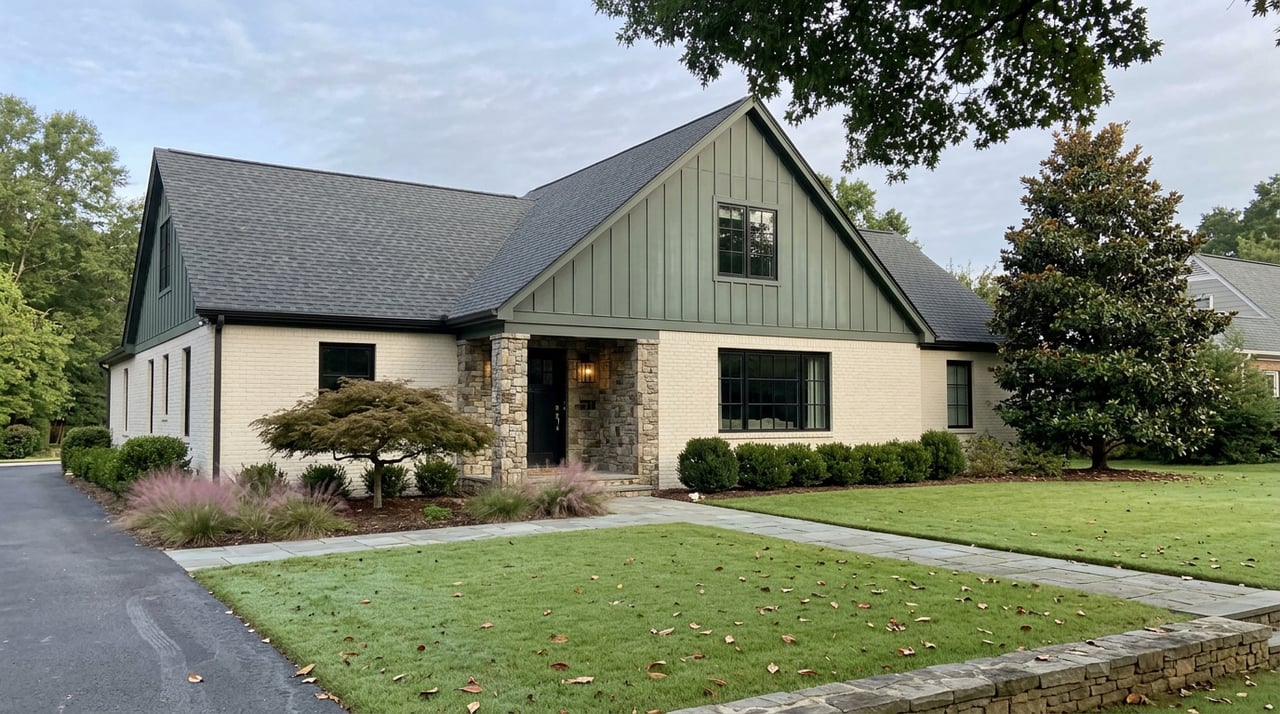
Holly Springs' New Construction Bottleneck Isn't Land. It's a Sewer Plant.
September 17, 2026
September 17, 2026
At a budget hearing in May, Holly Springs Town Manager Randy Harrington reached for an odd comparison to explain why water and sewer bills were about to climb again. To deliver the same 4,000 gallons a typical household uses each month, he said, you'd need 30,240 standard water bottles, which would run you about $5,040 at retail and wouldn't even cover the cost of hauling the wastewater back out. It was a strange way to justify an $11.89 monthly increase, but it made a point that matters more than the bill itself: water and sewer in Holly Springs are not abstract utility line items right now. They are the thing every new subdivision, every biotech campus, and every household relocation is quietly competing over.
If you've been watching Holly Springs from the outside, the town's reputation is growth. Biotech investment, a new Town Center under construction, a 150th anniversary this year. So it is a genuine surprise to look at the town's own numbers and see new-home permits falling off a cliff.
According to the town's FY27 budget message, single-family and townhome permits issued in 2025 fell to under 300, down from a 10-year average of roughly 600. That's not a modest cooling. That's permitting activity cut in half in a town that has spent the last decade being described as one of the fastest-growing in Wake County.
Here's the part that should stop a buyer or seller in their tracks: this isn't a story about builders losing interest. The same budget document notes that roughly 5,200 residential units are already approved but still unbuilt, sitting in the pipeline waiting to break ground. That's a backlog, not a shortage of demand or a shortage of approved lots. Something else is holding the line.
That something is the Utley Creek Water Reclamation Facility, the town's own wastewater treatment plant. It currently treats up to 6 million gallons a day and holds a permit to expand to 8 million gallons a day, with the expansion targeted to finish around 2029. Every new rooftop in Holly Springs, whether it's a starter townhome or a biotech clean room, has to tie into that same system. Until the expansion is finished, the town is managing a fixed resource against a growing list of claimants.
Holly Springs has spent the better part of two decades recruiting biotech manufacturing, and it worked. Amgen has committed more than a billion dollars to its campus, with a first facility expected to open in 2026. Fujifilm Diosynth Biotechnologies is building what's expected to be one of the largest biomanufacturing facilities of its kind in North America, a $3.2 billion investment tied to 1,400 jobs by 2031. Genentech, a Roche subsidiary, doubled its commitment in January 2026 to $2 billion and 500 jobs, marking the company's first East Coast facility. CSL Seqirus finished a $156 million vaccine plant in 2022 and has since drawn more than $155 million in federal grants for bird flu vaccine production.
Combined, these commitments run past six billion dollars, and every one of them needs wastewater capacity from the same Utley Creek system that serves subdivisions like Bridgeberry, Avocet, Holly Pointe, and Braxton Village in the town's fast-growing southwest corner. The town's own comprehensive planning documents describe new development, industrial and residential alike, as needing to make "equitable contributions commensurate with project impacts" toward that same shared infrastructure. Wastewater allocation isn't unlimited, and it isn't being handed out solely on a first-come basis. It's a negotiated resource, and life sciences projects with major job and tax-base promises tend to move to the front of the line.
That's the mechanism worth understanding if you're watching this market. The town isn't slowing down because people stopped wanting to move here. It's slowing down because the pipe hasn't caught up yet, and the pipe has other very well-funded customers.
None of this is free, and the town has been unusually direct about the price tag. Here's how the numbers have moved over the past year:
| What's changing | Detail |
|---|---|
| State-approved financing | $135 million in revenue bonds approved by the NC Local Government Commission in March 2026 |
| Rate trajectory | Water and sewer rates projected to rise 9% to 15% over the five years through 2031 |
| Typical monthly bill | Rising by $11.89 to about $111.30 a month under the FY27 budget proposal |
| Total utility investment | More than $500 million planned or underway over the next five years |
That bill increase lands on every household in town, whether you closed on a resale last year or you're waiting on a new-construction lot that hasn't broken ground yet. It's a cost that shows up after closing, not on the settlement statement, which makes it easy to miss when you're comparing sticker prices between towns.
If you're comparing Holly Springs to nearby Apex or Fuquay-Varina right now, the practical read is this: new construction inventory here is likely to stay tighter than the town's growth headlines would suggest, at least until the Utley Creek expansion is substantially finished. That's not a reason to avoid the market. It's a reason to weigh your timeline honestly.
A few things worth sitting with before you decide:
For scale, South Wake home sales data for July 2026, compiled from Wake County Register of Deeds records, put Holly Springs' median sale price at $602,500 on 14 recorded sales, compared to a $638,000 median in Apex and a lower median in Fuquay-Varina, which also posted the highest sales volume of the three markets that month. Holly Springs' smaller sales count means any single month's median can move around more than a larger market like Apex, so it's worth reading alongside multiple months rather than any one snapshot. If you're comparing Holly Springs against Apex or Fuquay-Varina, that price gap is worth understanding in light of the supply story above, not just as a standalone number.
Does this affect resale homes too, or just new construction? Resale homes are already connected to the system, so the allocation bottleneck doesn't block a resale purchase directly. It does mean resale competition may stay elevated as long as new-construction supply is constrained, and buyers should expect utility bill increases regardless of when a home was built.
Will the town stop approving new development until 2029? No. The 5,200-unit backlog shows the town continues to approve projects. The constraint is on how quickly those approved units can actually connect to wastewater service and break ground, not on whether new zoning or permits are being issued at all.
Should I wait for the expansion to finish before buying? That depends entirely on your timeline and priorities. Waiting could mean more new-construction choices when the Utley Creek expansion nears completion, but it also means several more years of rising utility costs and no guarantee that resale prices hold steady in the meantime. This is exactly the kind of tradeoff worth talking through with someone who tracks these numbers month to month.
If you're trying to figure out how this plays out for your specific budget and timeline, whether that means comparing new construction against resale or weighing Holly Springs against a neighboring town, Nev Nelson can walk through the current inventory and what's actually moving toward completion. Let's Connect.
Stay up to date on the latest real estate trends.

Whether you are a first-time buyer, a seasoned investor, or somewhere in between, I bring Raleigh / Triangle market knowledge and personal attention that make all the difference. I take time to understand your goals and tailor every step of the process to fit your needs. From strategy to closing, I ensure you feel confident and well-informed throughout your real estate journey.
Nev Nelson
201 Commonwealth Court, Suite 100 Cary, NC 27511