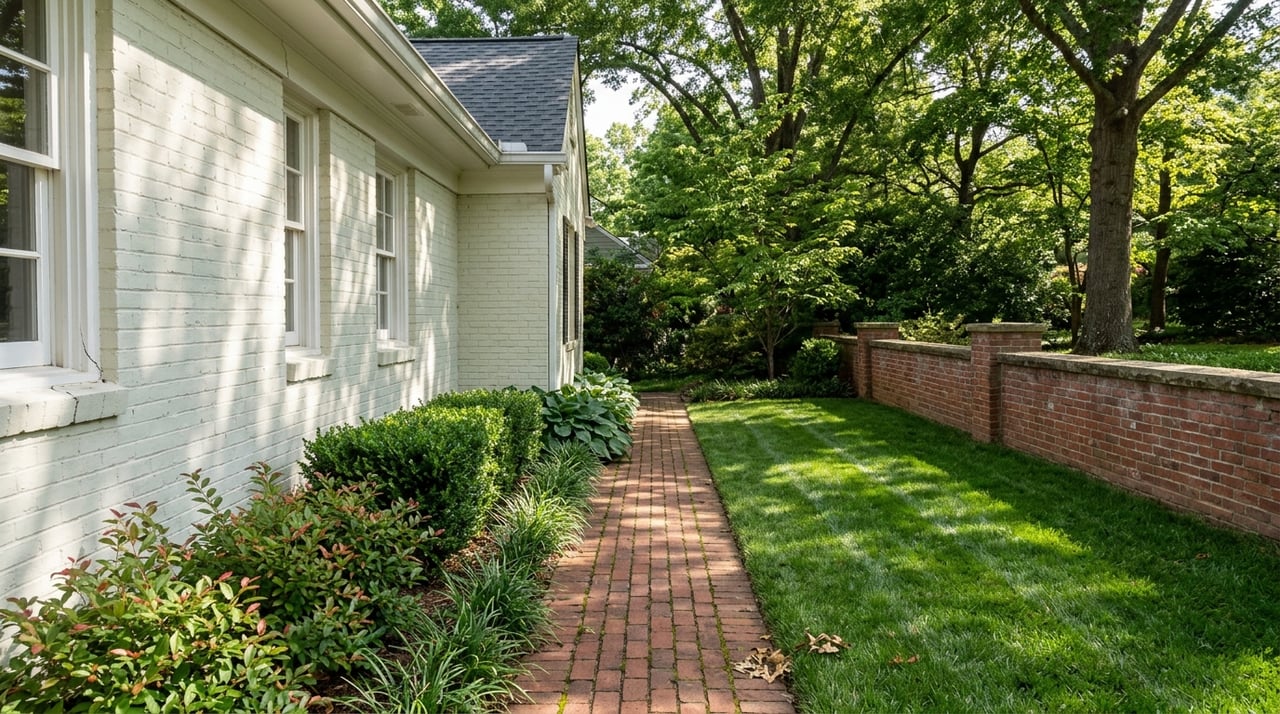
The Same Paperwork That Slows an Oakwood Renovation Can Also Pay for It
August 27, 2026
August 27, 2026
If you own or are about to buy a house inside one of Raleigh's local Historic Overlay Districts, you already know the drill. Want to swap the windows, repaint the trim, add a fence, or touch anything visible from the street? You need a Certificate of Appropriateness before a permit gets issued, full stop. Most owners treat that requirement as a tax on living somewhere pretty: more paperwork, more waiting, more chances for a volunteer commission to tell you no on the porch railing you already bought.
What most of that paperwork misses is the other half of the story. The same design standard the city uses to decide whether your project fits the neighborhood is the exact standard North Carolina uses to decide whether you qualify for a 15 percent state tax credit on that same renovation. Raleigh homeowners inside Oakwood, Boylan Heights, Blount Street, Capitol Square, Moore Square, or Prince Hall are sitting closer to that credit than almost anyone else rehabbing an old house in this state, and most of them never file for it because they think the two processes are unrelated.
They are not. Here is how they connect, and what it means for anyone buying, selling, or already living inside the line.
Every one of Raleigh's six local Historic Overlay Districts requires a Certificate of Appropriateness before any exterior change, regardless of whether the work also needs a separate building permit. The city splits applications into two tracks. A Minor Work COA gets reviewed by planning staff and covers routine items like in-kind repairs or straightforward material swaps. A Major Work COA goes in front of the COA Committee, a citizen commission that holds a quasi-judicial evidentiary hearing once a month, and the city's own guidance puts a complete Major Work application at 10 to 14 weeks to process, longer if the committee asks for a second hearing.
The process itself changed this year. As of January 2, 2026, the city adopted text change TC-3-24, updating how COA applications are handled to align with state law. If you pulled a COA a couple of years ago and assumed the rules are the same today, check again before you plan a timeline around old assumptions.
| Minor Work COA | Major Work COA | |
|---|---|---|
| Reviewed by | Planning staff | COA Committee (citizen commission) |
| Format | Administrative approval | Monthly evidentiary hearing |
| Typical timeline | Days to a few weeks | 10 to 14 weeks |
| Example projects | In-kind repair, like-for-like material replacement | New additions, demolition, new construction, substantial alterations |
None of this is optional scenery. Whether your address falls inside a district at all is something you can check yourself through the city's iMAPS tool before you write an offer or price a renovation, and it is worth doing before either.
Here is the part that gets lost. The COA process exists to hold your project to the Secretary of the Interior's Standards for Rehabilitation, the same set of preservation standards that has governed federal and state historic tax credit programs since the 1970s. North Carolina's State Historic Preservation Office reviews rehabilitation work against those identical standards when it decides whether a homeowner qualifies for the state's 15 percent tax credit on an owner-occupied historic property.
That credit is real money, not a marketing footnote. If your rehabilitation expenses exceed $10,000 within a 24-month window, and the work is certified as consistent with those standards, you can claim a credit equal to 15 percent of the qualifying expenses. It cannot be applied to acquisition costs, new square footage, site work, or personal property, and it has to be used the year the work is placed in service, though any unused portion carries forward for nine years.
Most homeowners chasing this credit anywhere else in North Carolina first have to get their house individually listed on the National Register of Historic Places or documented as a contributing building in a National Register district, a nomination process that typically takes a minimum of six months and often longer. Raleigh homeowners can skip that step entirely. The state recognizes only three certified local historic districts in North Carolina where a contributing building already qualifies without the separate National Register nomination: Raleigh, Goldsboro, and Madison. If your Oakwood or Boylan Heights home is a contributing structure inside the local overlay, you are already standing on the qualifying designation. You do not owe the state six more months of paperwork to get there.
The paint schedule, the manufacturer specs, the before-and-after photos your COA application already requires are nearly the same documents the State Historic Preservation Office wants for the tax credit. Most owners generate this file once, get their COA approved, and never realize they were one form away from getting 15 percent of the project back.
The credit application is a two-part process through the State Historic Preservation Office. Part A documents existing conditions and proposed work before you start, with photos and plans. Part B documents the completed work with after photos and proof the building contributes to a historic district. Owners are strongly encouraged to consult the office before breaking ground, since work that does not meet the Standards can get the credit denied even after the money is spent.
If you are planning or already mid-renovation on a contributing property in one of Raleigh's overlay districts, the practical sequence looks like this:
Skip step three and you have done all the design compliance work for nothing more than a blue placard on your door.
If you are pricing an offer or a listing inside Oakwood right now, be careful with the headline number. Portal-reported price data for the area has swung wildly this year, not because the market itself is unstable, but because so few homes trade in any given month that one sale can move the median by tens of percentage points. One portal put the broader Oakwood submarket's median sale price up 53.1 percent year over year as of May 2026. Separate portal data specific to the Historic Oakwood district itself showed prices down 11.9 percent to 13 percent over a similar trailing 12-month window, with active inventory as thin as one to six homes for sale at a time. Both can be technically accurate and neither tells you much on its own, because a single fully renovated Victorian selling above $1.5 million and a single unrenovated cottage selling below $700,000 in the same quarter will produce two completely different medians from an identical, tiny sample.
The number that actually helps you price a decision is not the district median. It is the finish level and COA history of the two or three closest comparable sales, including whether the prior owner completed rehabilitation work through the Standards-compliant process that would make a future buyer eligible for that same 15 percent credit on their next phase of work. A house with an approved COA file and documented rehabilitation is a different asset than one with the same square footage and no paper trail, and the district's own price data is too thin to show you that difference. You have to look at the file.
If you are buying inside one of Raleigh's six overlay districts, budget for the COA timeline as part of your renovation plan, not an afterthought after closing, and ask your inspector or contractor whether prior work on the house was done through the approved process. If you are selling, a documented COA and tax credit history on completed renovations is a genuine selling point worth surfacing in your listing narrative, not just a stack of permits in a drawer. If you already own and have been putting off exterior work because the COA process felt like pure friction, it is worth a conversation with the city's Historic Preservation Unit and the State Historic Preservation Office before you assume the paperwork only costs you something.
Frequently asked questions
Does every exterior change need a Certificate of Appropriateness? Yes, inside a Historic Overlay District or on a designated Historic Landmark, any exterior change needs a COA before a building permit is issued, regardless of size. Routine, in-kind repairs typically move through the faster Minor Work track.
What if my house is old but I am not sure it is a "contributing" structure? Not every building inside a district boundary counts as contributing to its historic character. Confirm status through iMAPS or by asking the city's Historic Preservation Unit directly before assuming eligibility for the tax credit.
Can I apply for the tax credit after the work is already finished? The Standards review is meant to happen before and during the project. Owners are strongly advised to file Part A and consult the State Historic Preservation Office before starting work, since retroactive applications risk denial if the completed project does not document compliance.
If you are weighing a purchase inside Oakwood, Boylan Heights, or one of Raleigh's other historic overlay districts, or trying to figure out what your current renovation plans are actually worth on paper, Nev Nelson can walk through the comps, the COA history, and the numbers with you before you commit to either side of the transaction. Let's Connect.
Stay up to date on the latest real estate trends.
Whether you are a first-time buyer, a seasoned investor, or somewhere in between, I bring Raleigh / Triangle market knowledge and personal attention that make all the difference. I take time to understand your goals and tailor every step of the process to fit your needs. From strategy to closing, I ensure you feel confident and well-informed throughout your real estate journey.
Nev Nelson
201 Commonwealth Court, Suite 100 Cary, NC 27511